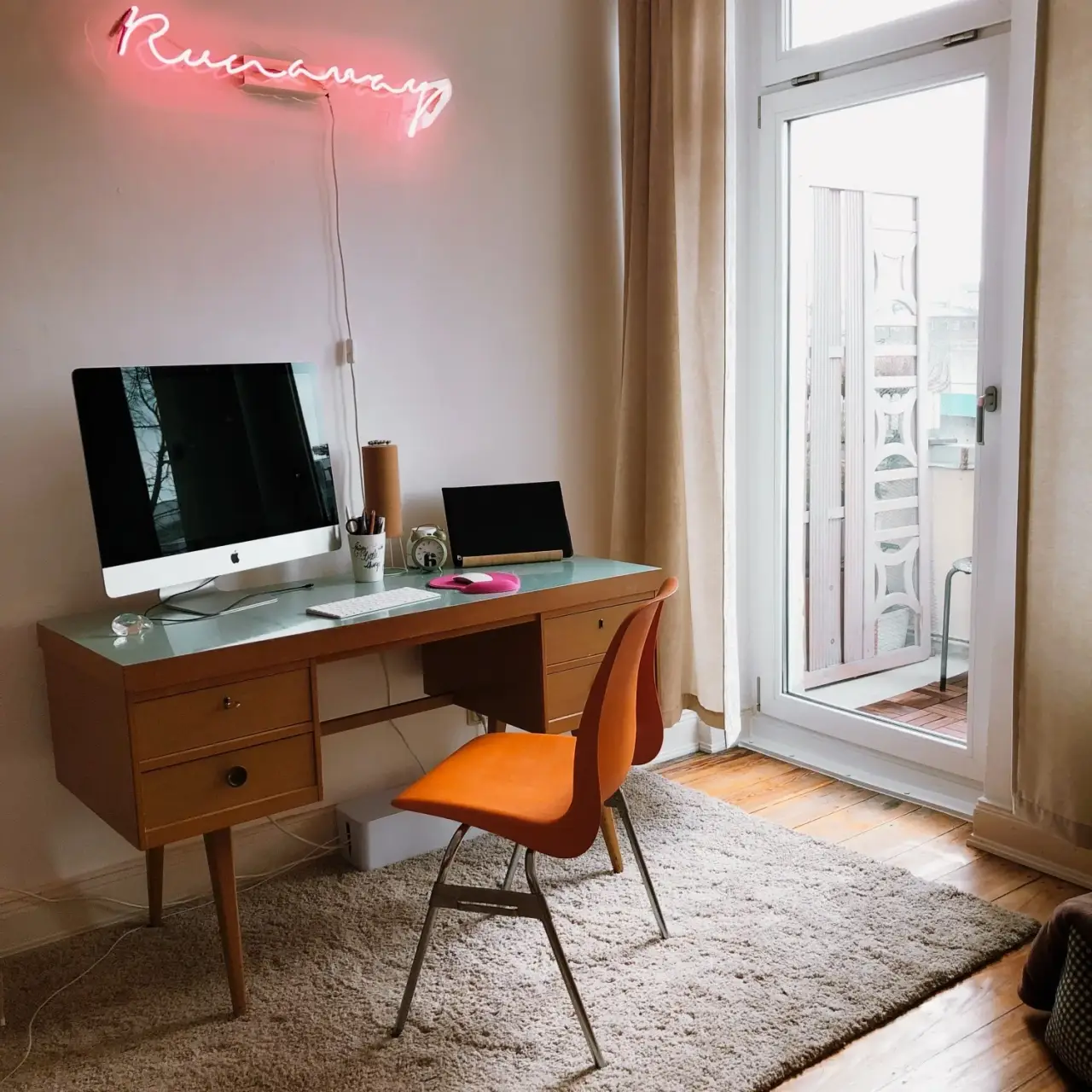
Many of us are working from home. Under duress. And many of us are rediscovering our love of joggers and hoodies. Thank goodness Maria Kondo didn’t get to clear out everything after all. But who could have known that a virus would force us all to stay within our four walls, 24/7? A structured daily routine and the right psychological tricks make working from home more bearable, and sometimes even quite pleasant.
The right room settings
According to a study by the Fraunhofer Institute for Industrial Engineering (IAO), the right setting is EVERYTHING. The right lighting, the appropriate noise level (the author is trying “Floating through Space” on Spotify) and the height of the room all play a significant subconscious role in creative processes.
Light: Most people prefer a rather low light level for creative work. That’s probably down to psychology. Light that’s too bright inhibits the feeling of freedom, and that’s what creativity needs. But that doesn’t mean you should draw the curtains: dimmed, warm light from several sources, perhaps, creates a homely atmosphere.
Noise: A medium noise level creates a process discontinuity in people, which leads to an increase in abstract thinking and so in creativity. Which is to say: soft music in the background, neither choppy nor too loud, enhances the creative thinking process. So deep house is helpful, electro jazz less so - but that’s a subjective interpretation.
The room itself: The height of the room is no minor factor: you’re more creative in rooms with high ceilings and more focused under normal and low ceilings, since these help you master concrete, detailed tasks. By the way: according to the Fraunhofer Institute study, people are most creative at temperatures between 26°C and 27°C. What feels tropical to some evidently heats up the brain as well.
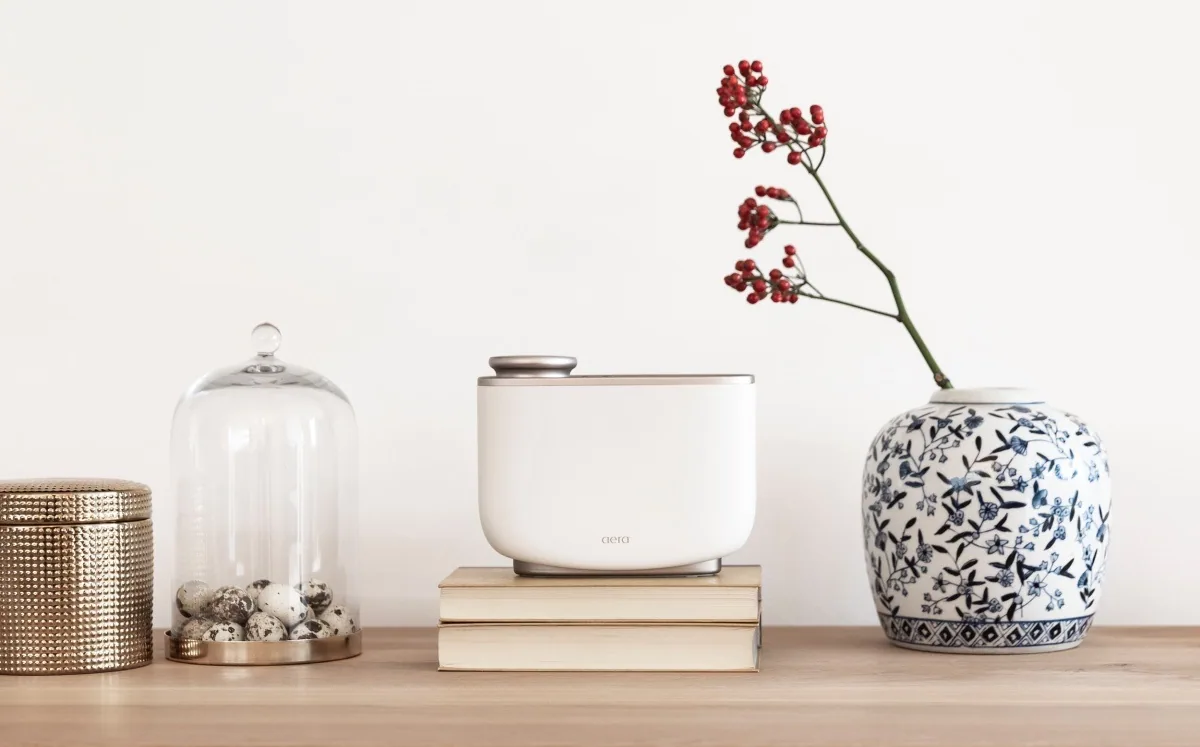
Scent: According to the Fraunhofer Institute, scents are extremely important elements of a room, with a strong influence on wellbeing, work performance and stress levels. Creative types should sniff more scents along the lines of cinnamon and vanilla. The whole spectrum of citrus scents promotes concentration. Peppermint and eucalyptus help against tiredness, fatigue (and boredom).
The upshot.
What the Fraunhofer Institute didn’t specifically list in this case is the credo “Dress for Success”, meaning: get out of your pyjamas when you “go” to your home office. Psychologically, it’s important to motivate yourself to keep everyday life as “normal” as possible. That goes for clothes too: if you dress well, you feel good. And if you’re lacking motivation, have a sniff of a bottle of peppermint oil. Or switch on the AROMEA AERA. Then you’ll get just the right portion of every mood within your four walls at the touch of a button. So: are you still bored, or are you sniffing already?